

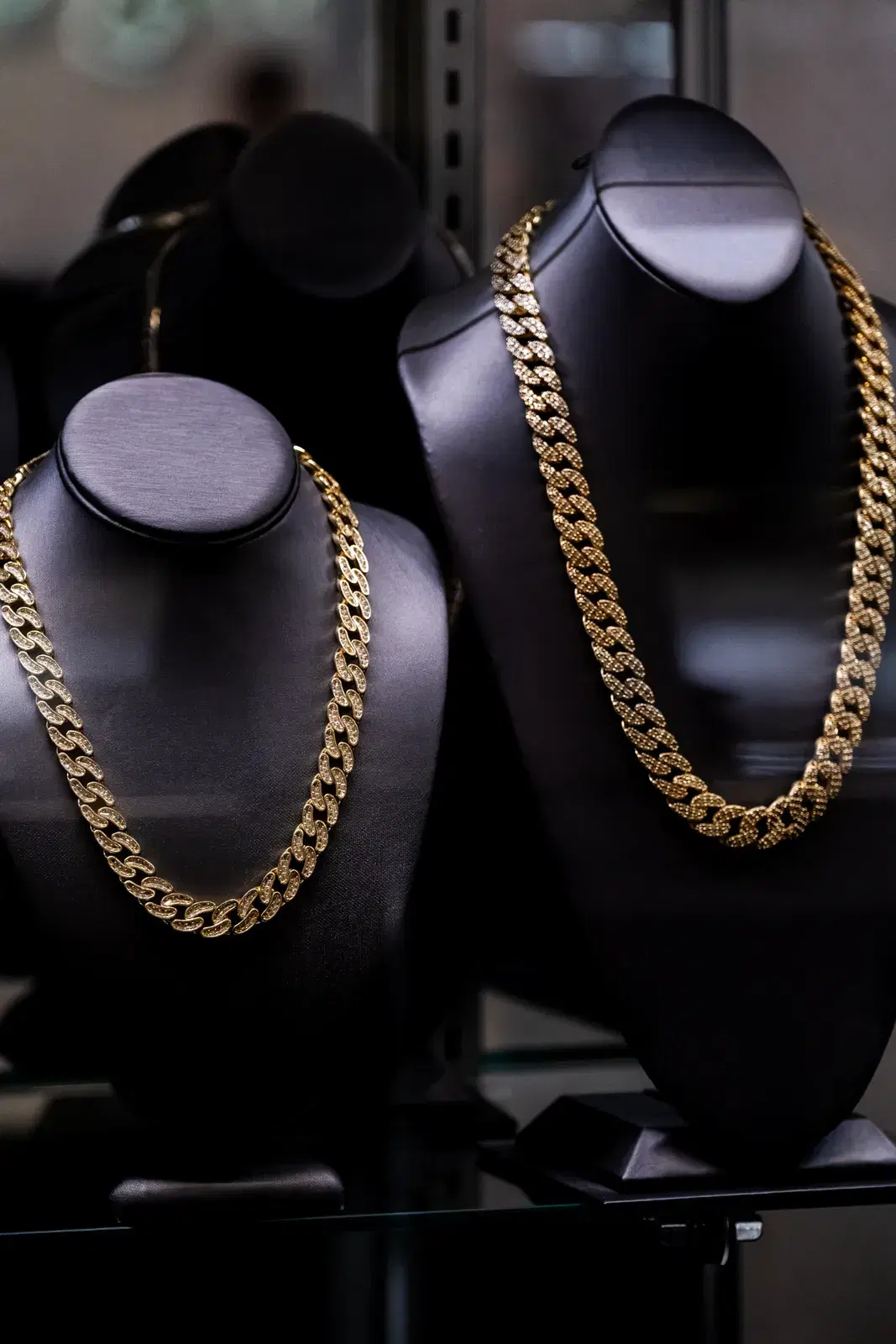
Gold & Appraisals
How to Sell Gold Jewelry for the Best Price (Without Getting Lowballed)
With gold trading near record highs, the broken chains and single earrings in your drawer may be worth real money. But payouts for identical gold vary wildly, from 40% of melt value at some mail-in operations to 90%+ at honest local buyers. We buy gold every day at our Manchester, CT store, so here's exactly how the process works and how to walk away with the most cash.
Step 1: Know what you have
Look inside rings and on chain clasps for karat stamps: 10k means 41.7% pure gold, 14k is 58.3%, 18k is 75%, and 24k is pure. European pieces may read 417, 585, or 750, which mean the same thing. "GF" or "GP" means gold-filled or gold-plated, which has little melt value.
Weight matters too. A kitchen scale in grams gives you a rough idea, though buyers use calibrated jeweler's scales. A typical man's 14k wedding band weighs 4–7 grams; a substantial chain can be 20–50 grams.
Step 2: Calculate melt value before you shop offers
Melt value = weight in grams × purity × today's gold price per gram. Example: a 10-gram 14k chain at $85/gram spot gold is 10 × 0.583 × $85 ≈ $495 melt value. That number is your negotiating anchor.
No buyer pays 100% of melt, since refining costs and margin are real, but reputable local buyers pay 70–90% of melt for common gold. If someone offers you $200 for that $495 chain, walk out.
Step 3: Check whether it's worth more than melt
Not everything should be melted. Signed pieces (Tiffany, Cartier, David Yurman), antique and Victorian jewelry, and anything with quality diamonds or gemstones can be worth far more intact. A good jeweler will tell you when a piece deserves resale pricing instead of scrap pricing. That honesty is the biggest reason to sell to a jeweler rather than a "we buy gold" storefront that only knows melt.
Diamonds over about a quarter carat have independent value; make sure any offer itemizes stones separately rather than lumping everything as "scrap."
Where to sell: comparing your options
Local independent jewelers generally pay the most, 70–90% of melt, because they refine in bulk and also resell better pieces. Pawn shops typically pay 40–60%. Mail-in TV buyers are consistently the worst, often 30–50%, and you've mailed away your leverage. Gold parties and traveling hotel buyers rely on sellers not knowing melt value.
Whoever you choose: ask how the offer relates to the day's gold price, get offers itemized by karat, and never leave items "for later evaluation" without a detailed receipt.
Selling gold in the Hartford area
At King's Jeweler in The Shoppes at Buckland Hills, we test and weigh your gold, explain the math, and make a same-day cash offer. No appointment needed, no obligation to sell. If a piece is worth more as jewelry than as metal, we'll say so.
Gather your pieces and stop in or contact us. If you're deciding between selling and insuring, read our guide to jewelry appraisals first; some "scrap" turns out to be worth protecting.
Frequently asked questions
Related reading
Written by
The King's Jeweler FamilyOwners & Master Jewelers
King's Jeweler is a family-run jewelry store inside The Shoppes at Buckland Hills in Manchester, Connecticut. From engagement rings and custom pieces to same-day watch batteries and expert repairs, every customer is helped personally by a jeweler who cares about getting it right. More about King's Jeweler
Have a question about your jewelry?
Bring it in and we'll take a look, explain your options, and give you an honest answer on the spot at The Shoppes at Buckland Hills in Manchester, CT.
Visit or Contact Us
Come get the royal treatment
Whether it's an engagement ring, a five-minute battery, or a piece designed just for you, we take care of it personally. Stop by the store or send us a message.